I was eight years old when I drew a blue bird. It was a grand moment. Something shifted. I realised I could draw. Not that I'd been taught to - not formally - but that I could. That the thing I saw in my mind could find its way onto paper through my hand. Birds have stayed with me ever since.
Earlier, at the age of 4, I was drawn to watching a television programme, where a woman played piano. Despite searching for years, I've never managed to find the name of that programme. Sadly, I don’t recall this memory myself but it is my Mother who recalls it. Apparently, I was mesmerized by the performer’s playing and asked for piano lessons soon after! However, I do recall my very first piano lesson (about the same age) - the hall where the brown upright awaited, the light, the smell and my legs dangling over the piano stool.
These two early encounters - with drawing and with music - shaped the languages I would spend my life learning to speak.
Art and Music as Language
We don't often think of art and music this way, but they are languages. Like Italian and French, they share certain grammatical structures even as they sound and appear quite different. Both have tones and contrast. Both rely on dynamics - the careful balance of emphasis and restraint. Both use rhythm, proportion, and relationship.
Music has its own grammar: phrasing, harmonic progressions, the rules of composition that we find in theory books. Visual art, too, has rudiments and principles, a formal structure that can be studied and learned. Yet alongside this formal learning sits something equally vital: our intuition, our life experiences, the accumulated weight of what we've lived through. These are what give both art and music their true direction and meaning. Without them, technique alone remains mechanical. It is the meeting of theory and lived experience that creates something with genuine momentum….something that speaks.
Yet unlike French or Italian, art and music use no words. This is precisely what makes them the easiest and yet the hardest languages to comprehend.
How We Learn These Languages
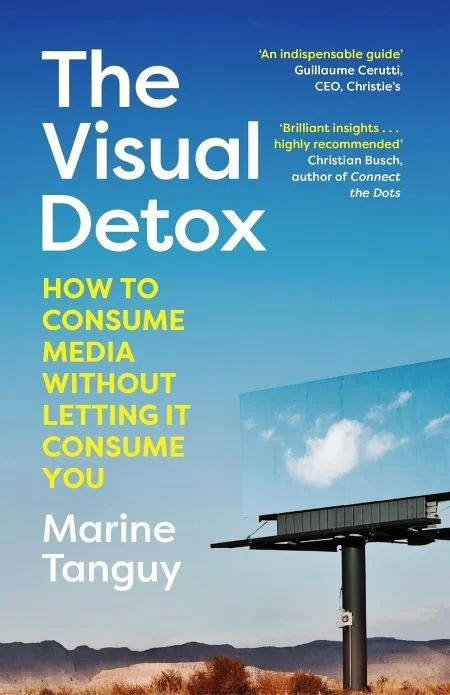
Marine Tanguy, in her book The Visual Detox, writes about how our exposure to visuals and imagery during childhood shapes our understanding of the visual language. We don't arrive in the world already fluent. We absorb it. A child who sees art early - whether in a gallery, a home, or on a television screen - begins building a visual vocabulary almost without knowing it. The same is true of music.
While I was watching a stranger's hands on a piano, I was building something without understanding what it was. Years of piano lessons followed, yes - but the seed was planted in that single moment of attention. And the blue bird at eight - that wasn't the moment I learned to draw. It was the moment I realised I'd already been learning, through looking, through noticing, through exposure.
These languages are absorbed long before we can explain them.
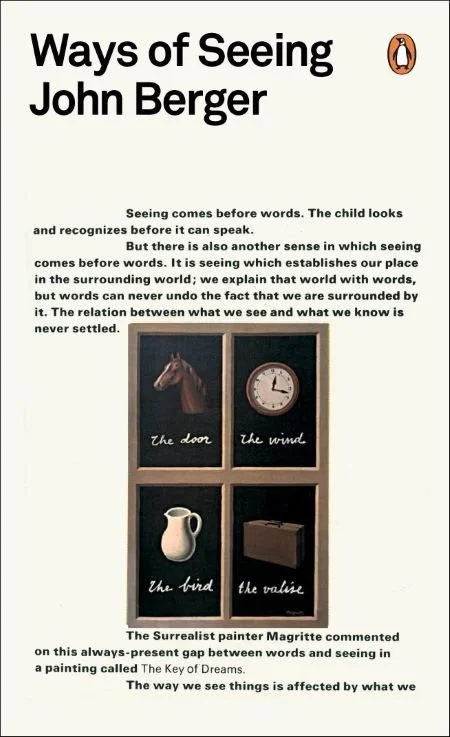
Another book, I highly recommend is The Ways of Seeing by John Berger. This was compulsory reading as an art student and rightly so.
The Question of Return
Not long ago, a colleague visited a museum. He said, flatly and matter-of-factly, that art was the only thing you didn't get a return on. You put time and attention into it, and you got nothing back in exchange.
His words hurt me. As a creative, I disagreed deeply. And I was angry!!
But his comment also sparked something. It made me think about why I make art, and what art has given me - from that four-year-old watching a pianist, to the eight-year-old discovering she could draw, to now. It forced me to confront a question I hadn't fully articulated before: what is the impact of art, really? And how do we measure something that resists measurement?
The Gradual Gift
Here is what I should have said to my colleague: the return on art is real. It's just not immediate, and it's not the kind of return he was looking for.
Sometimes the impact of art is instantaneous — a piece catches you in a moment and you're undone by it. But most often, the impact is gradual. It's unique in that way. It's why people choose to adorn their homes with art, placing a piece in a particular room where they can look at it, ponder it, let it work on them over time.
A painting or a drawing doesn't demand your attention the way a performance does. It simply sits with you. Quietly. Accumulating meaning. My Prelude in C hangs in someone's home now, and the collector told me the piece looks absolutely amazing and that they could not be more pleased with it. They love it.
That is the power of art. That is its return.
Perhaps this is why so many of us who make art struggle to explain it. The impact doesn't fit neatly into words. It lives in the spaces between looking and understanding, between exposure and fluency. We're trying to articulate something that operates in a language without words. But we must try nonetheless.
A Question for You
Is there a piece of art or a piece of music that has worked on you slowly over time? Something that has become a quiet companion in your life - not demanding explanation, but offering something you've come to depend on? I'd love to know.