
Colour Archetypes: The Why and the How
I thought it would be fun to turn my colour system and a bit of music theory into a personality quiz. However, I didn't want to weaken the system I'd built. If anything, I wanted to go deeper into it: to put more theoretical pillars in place, and to share the whole thing through something approachable.
I also wanted to chip away at some of the fear around Classical music, which can feel like such a closed, niche world. One of the reasons I first started translating music scores was so that I could study them properly. When I used to play piano, there was very little of that — I mostly concentrated on how the music felt.
My work is built on colour, and on the colour spectrum of the scale. The link to feelings, though, came later. It wasn't something I set out with. Once the system was already in place, I found myself wondering about it: colours have always carried meanings and symbolism, so what would it look like to explore that within my own work? The quiz grew out of that question.
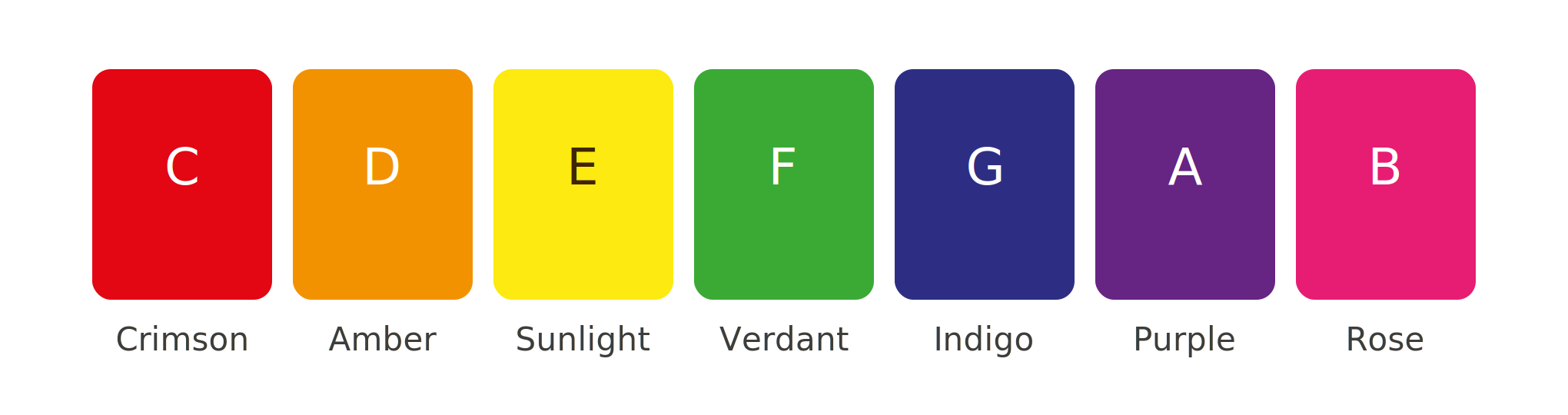
If you know my work, you'll know that every note is assigned its own colour, and that never changes (whichever key a piece of music happens to be in). My system has stayed fixed from the very beginning. It could change, but I've never wanted it to. I wanted a set rule, the way Western music has its tonal theory.
The cards
On 29 July I'm releasing a set of colour archetype cards, and making them has been its own kind of study.
Each card is built on a triad (simply meaning three notes). One side shows those three notes with their individual colours, and a short description of that interval's character. The other side is an artwork. It’s a visual representation of that particular archetype / personality. So each card holds both halves of what I’m doing here at once — the theory, and the feeling that comes out of it.
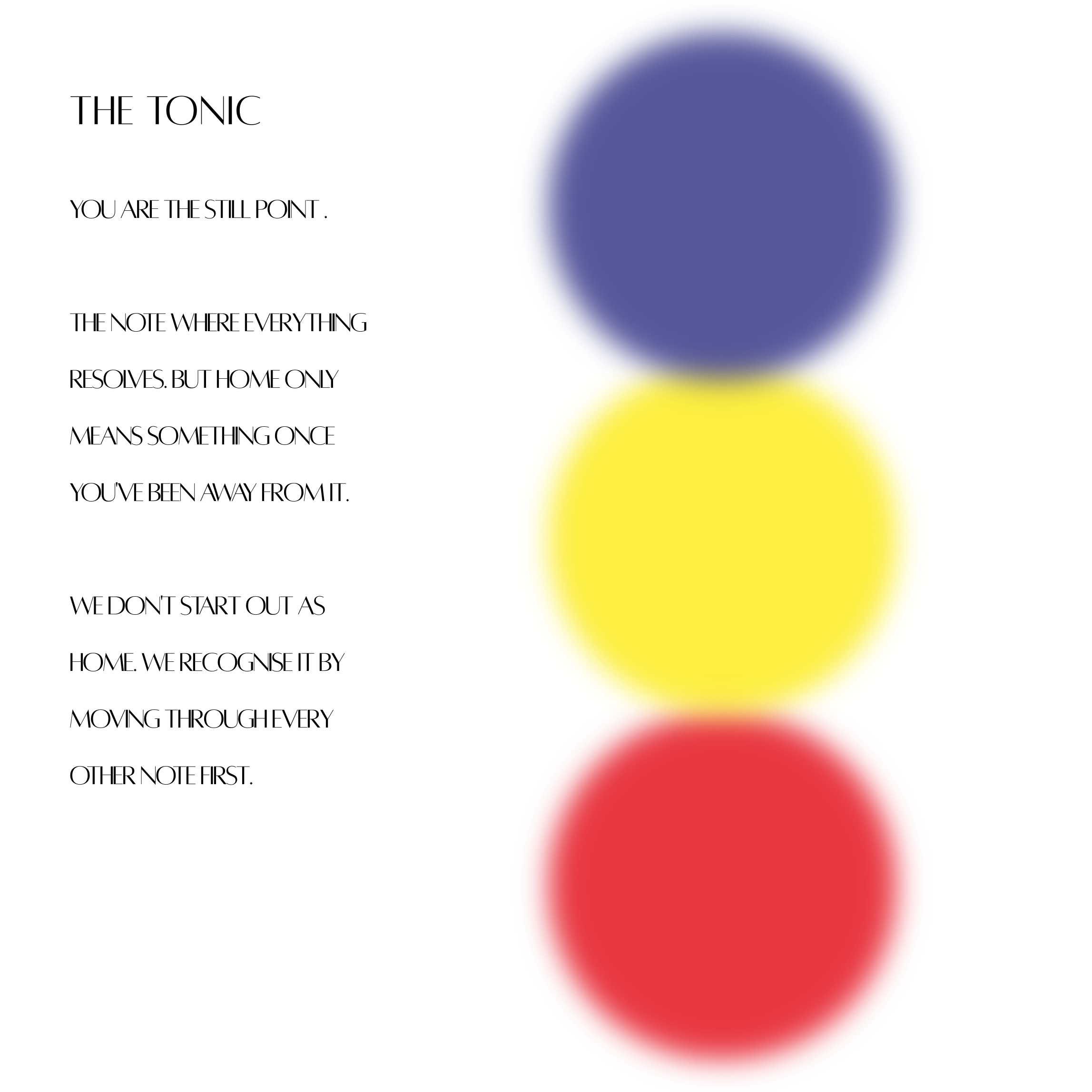

The Tonic in the key of C Major, where the tonic is C
This is the first of the cards and the intervals. The Tonic. It’s also considered ‘home’ — the still point the whole scale keeps returning to. And there's a reason it feels so right. The Tonic chord is built from the three primary colours — Crimson, Sunlight and Indigo, or red, yellow and blue — and from those three, every other colour can be mixed. So the home note doesn't only sit at the centre of everything…. it contains everything! The Tonic is the point of foundation.
In the Tonic's design, I wanted to show how all colours stem from its three triad colours, using a woven, Jacquard-like effect where the hues interlace and blend. As a result, you can see hints of orange, pink and purple threaded through the Tonic.
Something I didn't plan
As I was making these cards, I noticed something I hadn't planned. When I laid the colours out next to each other, a lot of the notes and their fifths turned out to be colour opposites — complementaries (colours that sit opposite each other on the wheel).
I didn't set out to make it work that way. It just happened, which is what surprised me.
Interestingly, it doesn't line up perfectly every time, and there's a reason for that. A normal colour wheel has six colours, each with a perfect opposite.
See the diagram below.
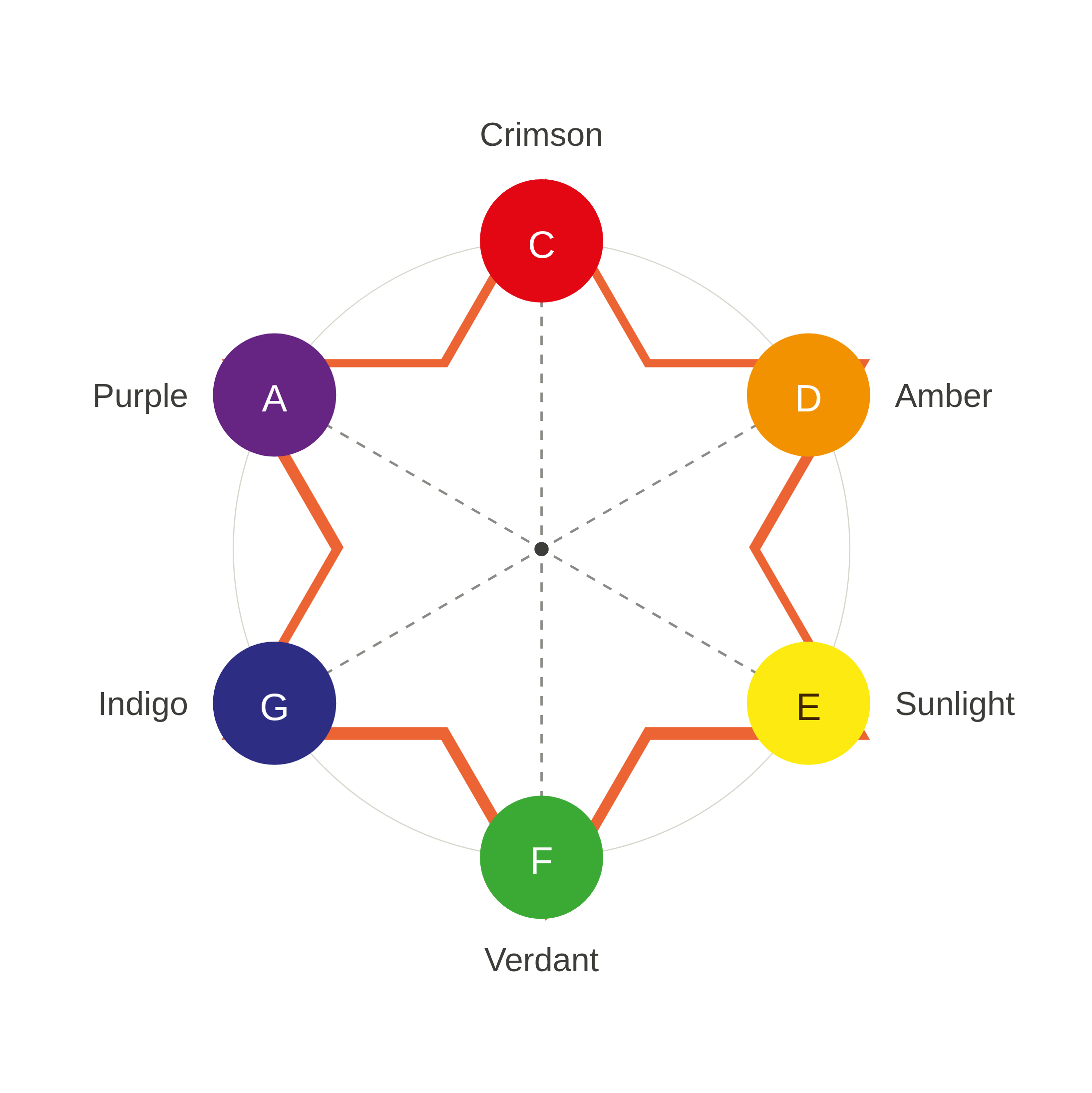
But my scale has seven. So the colours don't sit evenly around the wheel. There's always one that overreaches by a note. That's why it works cleanly one way (going down a fifth, like F back to C) and just overshoots the other (going up, like C to G):
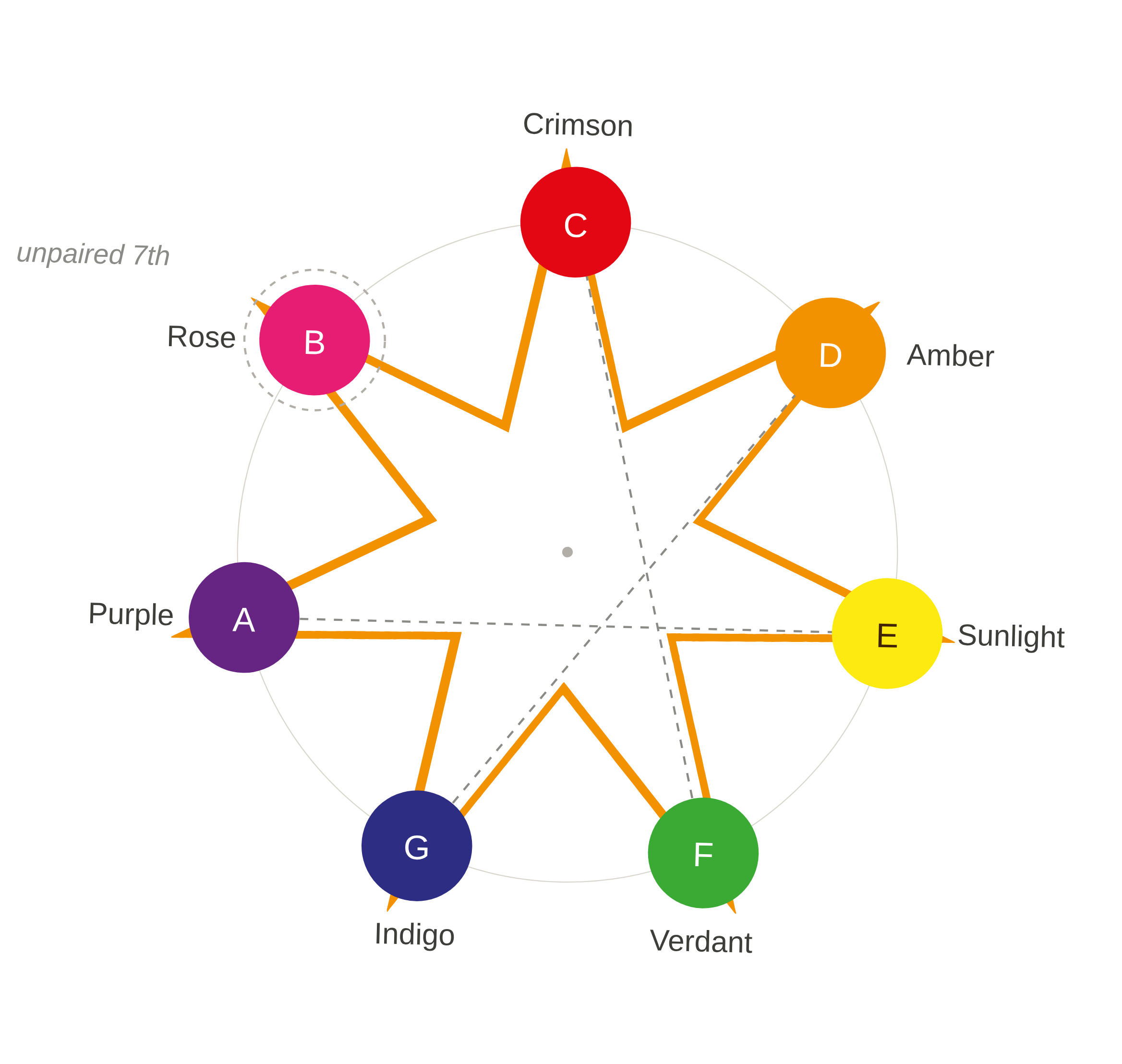
For me, that near-miss is the interesting part. I didn't force the system into place. It's built on real relationships between the notes, and the colours simply followed. That's what tells me there's something solid underneath — not just a pretty idea, but one that holds together.
The cards are coming
There's a lot of colour in my work, and a lot of brightness, but none of it is arbitrary. Every colour is where it is for a reason, and always has been. That's the whole point: not fanciful, but intentional. Coherent. Built to hold.
So which note are you?Take the colour archetype quiz to find out. When you get your result, sign up and your full archetype description lands in your inbox right away, along with all seven to explore. Then, on 26 July, you'll be first to receive your complete set of Colour Archetype Cards and a printable poster of all seven — ahead of the public launch on the 29th.

What Colour is a Minor Key?
Why a minor key was never just sad
Recently, someone left a comment on one of my Instagram posts asking how I developed my colour system and whether I had designed it to reflect emotions from the start.
It's a question I find genuinely interesting, because the answer is no. And yet the connection to emotion is real.
When I first built my colour system, I wasn't thinking about feelings at all. I was thinking about progression, about how one colour could lead into the next seamlessly. Red easing into orange, orange into yellow, yellow into green. Those transitions feel harmonious because they move by small steps, each colour sitting close to the one beside it, just as C, D, E, F, G, A, B move through a scale in a way that feels natural and almost inevitable. That was the whole logic: not emotional instinct, but proximity. Beauty built through gradual progression; harmony built from nearness — one tone, one colour, leaning into the next.
What I've come to understand more deeply since is that this logic was never merely decorative. Harmony, by its nature, is structure — it is how tones are organised and related to one another. And because I assign one colour to each tone, colour takes on that same structural role. A colour in my work isn't an embellishment laid over the music. It is the music's architecture made visible. That's the part I want to be clear about: colour here is doing the work of harmony, not indulging in prettiness. It's precisely because colour becomes structure that it can hold what structure holds, including the full intricacy of feeling.
The richness within a single key
Here's what I've discovered since coining my practice "Drawing Music," and since assigning each piano key (C, D, E, F, G, A, B) its own fixed colour. That colour doesn't change based on the emotional context of the piece. C is always C's colour. D is always D's colour, and so on.
This means something crucial happens when you translate a piece in a minor key visually. A composer choosing to write in A minor isn't choosing to erase the brightness of C, D, E, F, G, A, B. They're choosing to frame those same notes differently — to arrange them in a way that creates harmonic darkness, tension, shadow. But the colours remain. They're still there, still singing.
So when you look at a visual translation of a minor-key piece in my work, you don't see a dark, monochromatic result. You see colour, and often quite vivid colour! The minor tonality creates a particular emotional weight, a certain gravity or melancholy. But it doesn't darken the palette. Instead, you get moments of pure brightness held within that darker frame (see the image below). A flash of yellow or green or blue emerging from what might otherwise feel sombre.
This is, I think, the most honest visual translation of what minor keys actually feel like: not the absence of light, but light moving through shadow. Not one emotion, but several layered together. A piece can feel mournful and still be radiant. Sad, yes….but also bright. Multifaceted and multilayered.
This is why my system insists on colour even when the music becomes sombre. Because human emotion isn't a single tone - it's a chord.
A question of origin
The same commenter raised something else I've thought about before: could a different colour system be built for a Phrygian scale, or another mode? Absolutely. A different harmonic logic would generate a different colour progression, which would be equally coherent and equally beautiful in its own terms. The Phrygian mode has a distinctive character. Think mysterious, almost a Middle Eastern quality, which the Phrygian-based colour system might honour in its own way.
My system is not the only possible one. It is a system — built on one kind of harmonic logic. What matters is the internal coherence: that each step leads beautifully into the next, that the whole holds together the way a well-composed piece holds together. As an artist, I rely on insight and an internal pull toward the "right" progression.
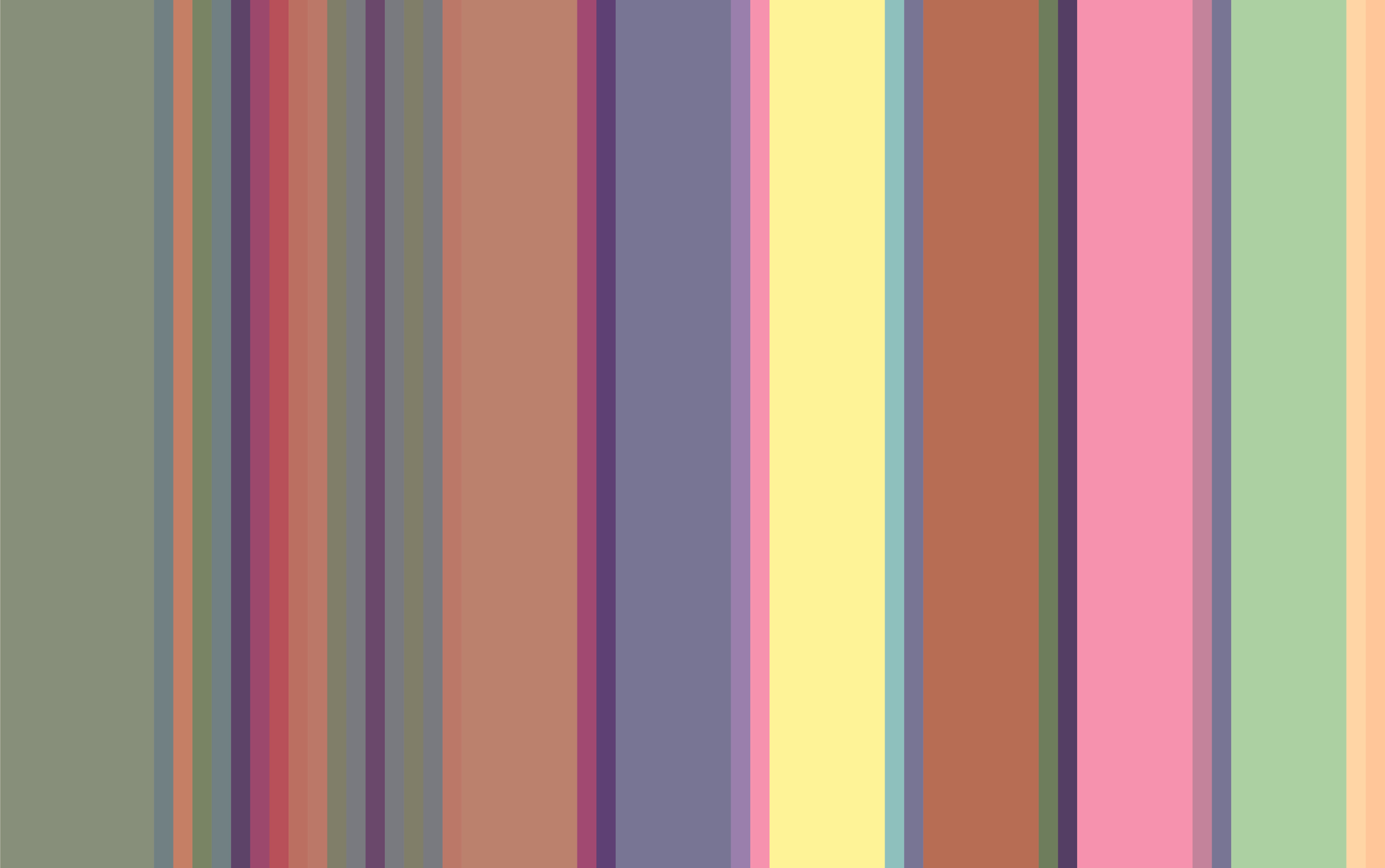
Excerpt from Bach’s Prelude in E Flat Minor, Bars 25 - 27
What you're really drawn to
Recently, I created a colour archetypes quiz, which is not to tell you which colour you are, but to offer a language for noticing which harmonic qualities you're naturally drawn to.
I want to be careful here. The system I've built is, in the end, a system: one particular mapping of colour to tone. Another mapping could have been just as coherent. What matters isn't the colour itself, but the function i.e. the harmonic role that colour carries. The dominant has its own particular pull. The submediant its own gravity. These qualities are what the quiz is really asking about.
The colour you name as your favourite isn't always the one you reach for. The quiz is centred on that second one, on the tone you instinctively return to, not the one you'd declare (though sometimes they're the same).
I'm building a deck of cards around these qualities, and they'll be available to you free when they're complete.
Take the quiz and discover your colour archetype →
You'll get your result straight away. Sign up, and you'll receive a fuller description of your own archetype alongside the complete set — and be first to know when the deck of cards lands.
The Gradual Gift
I was eight years old when I drew a blue bird. It was a grand moment. Something shifted. I realised I could draw. Not that I'd been taught to - not formally - but that I could. That the thing I saw in my mind could find its way onto paper through my hand. Birds have stayed with me ever since.
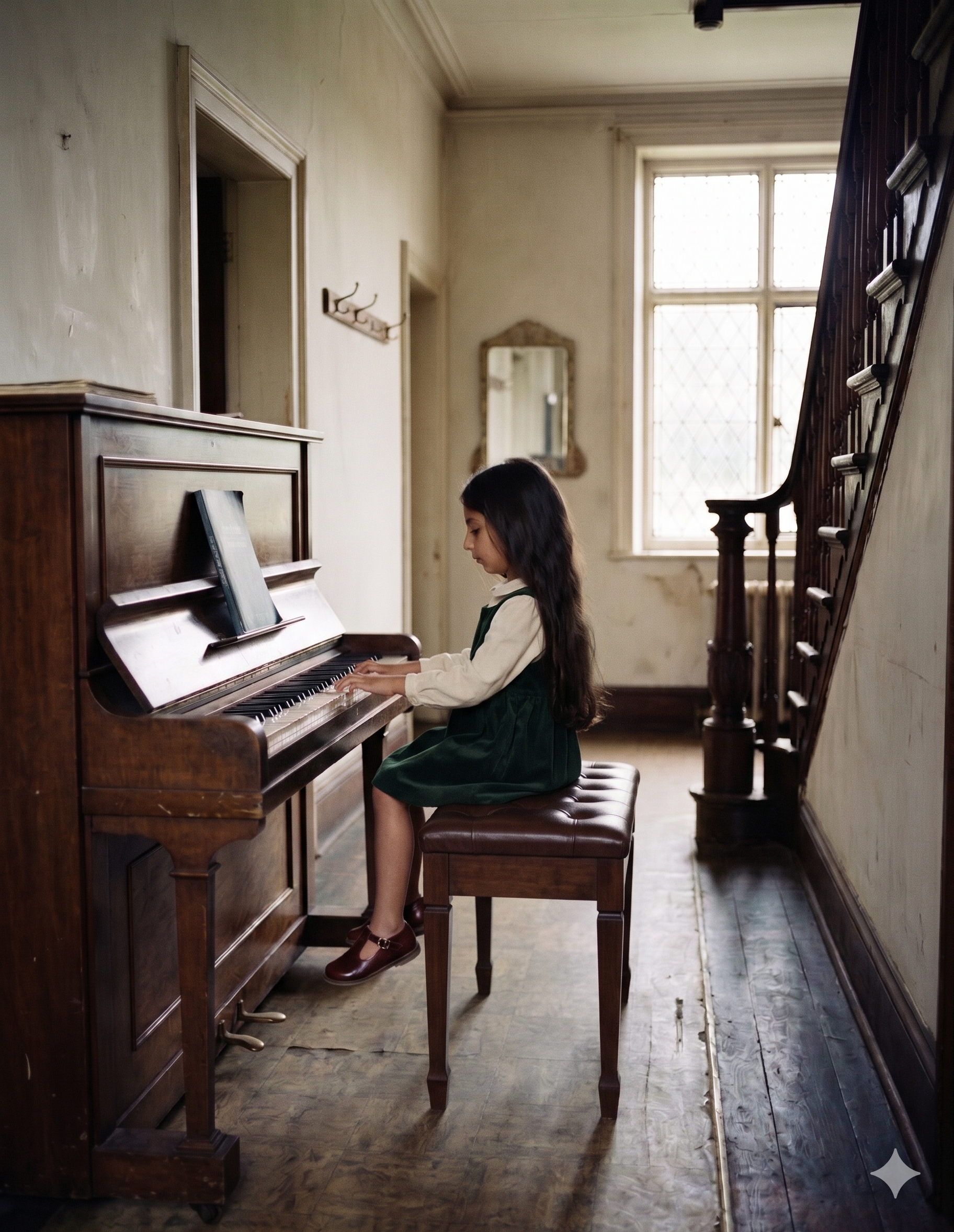
Earlier, at the age of 4, I was drawn to watching a television programme, where a woman played piano. Despite searching for years, I've never managed to find the name of that programme. Sadly, I don’t recall this memory myself but it is my Mother who recalls it. Apparently, I was mesmerized by the performer’s playing and asked for piano lessons soon after! However, I do recall my very first piano lesson (about the same age) - the hall where the brown upright awaited, the light, the smell and my legs dangling over the piano stool.
These two early encounters - with drawing and with music - shaped the languages I would spend my life learning to speak.
Art and Music as Language
We don't often think of art and music this way, but they are languages. Like Italian and French, they share certain grammatical structures even as they sound and appear quite different. Both have tones and contrast. Both rely on dynamics - the careful balance of emphasis and restraint. Both use rhythm, proportion, and relationship.
Music has its own grammar: phrasing, harmonic progressions, the rules of composition that we find in theory books. Visual art, too, has rudiments and principles, a formal structure that can be studied and learned. Yet alongside this formal learning sits something equally vital: our intuition, our life experiences, the accumulated weight of what we've lived through. These are what give both art and music their true direction and meaning. Without them, technique alone remains mechanical. It is the meeting of theory and lived experience that creates something with genuine momentum….something that speaks.
Yet unlike French or Italian, art and music use no words. This is precisely what makes them the easiest and yet the hardest languages to comprehend.
How We Learn These Languages
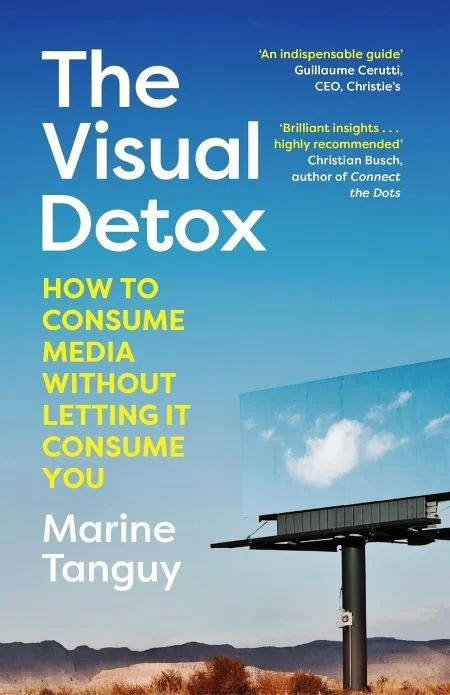
Marine Tanguy, in her book The Visual Detox, writes about how our exposure to visuals and imagery during childhood shapes our understanding of the visual language. We don't arrive in the world already fluent. We absorb it. A child who sees art early - whether in a gallery, a home, or on a television screen - begins building a visual vocabulary almost without knowing it. The same is true of music.
While I was watching a stranger's hands on a piano, I was building something without understanding what it was. Years of piano lessons followed, yes - but the seed was planted in that single moment of attention. And the blue bird at eight - that wasn't the moment I learned to draw. It was the moment I realised I'd already been learning, through looking, through noticing, through exposure.
These languages are absorbed long before we can explain them.
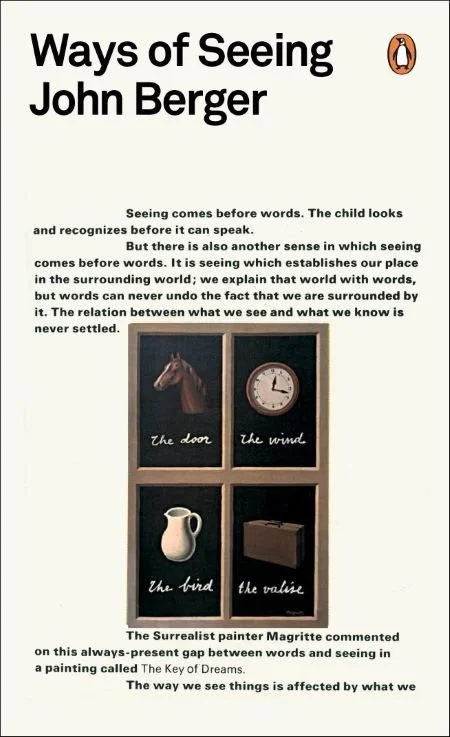
Another book, I highly recommend is The Ways of Seeing by John Berger. This was compulsory reading as an art student and rightly so.
The Question of Return
Not long ago, a colleague visited a museum. He said, flatly and matter-of-factly, that art was the only thing you didn't get a return on. You put time and attention into it, and you got nothing back in exchange.
His words hurt me. As a creative, I disagreed deeply. And I was angry!!
But his comment also sparked something. It made me think about why I make art, and what art has given me - from that four-year-old watching a pianist, to the eight-year-old discovering she could draw, to now. It forced me to confront a question I hadn't fully articulated before: what is the impact of art, really? And how do we measure something that resists measurement?
The Gradual Gift
Here is what I should have said to my colleague: the return on art is real. It's just not immediate, and it's not the kind of return he was looking for.
Sometimes the impact of art is instantaneous — a piece catches you in a moment and you're undone by it. But most often, the impact is gradual. It's unique in that way. It's why people choose to adorn their homes with art, placing a piece in a particular room where they can look at it, ponder it, let it work on them over time.
A painting or a drawing doesn't demand your attention the way a performance does. It simply sits with you. Quietly. Accumulating meaning. My Prelude in C hangs in someone's home now, and the collector told me the piece looks absolutely amazing and that they could not be more pleased with it. They love it.
That is the power of art. That is its return.
Perhaps this is why so many of us who make art struggle to explain it. The impact doesn't fit neatly into words. It lives in the spaces between looking and understanding, between exposure and fluency. We're trying to articulate something that operates in a language without words. But we must try nonetheless.
A Question for You
Is there a piece of art or a piece of music that has worked on you slowly over time? Something that has become a quiet companion in your life - not demanding explanation, but offering something you've come to depend on? I'd love to know.
Ave Maria: Radiance, Sanctuary and the Structure of Music
Music unfolds through time.
It moves, develops, departs and returns.
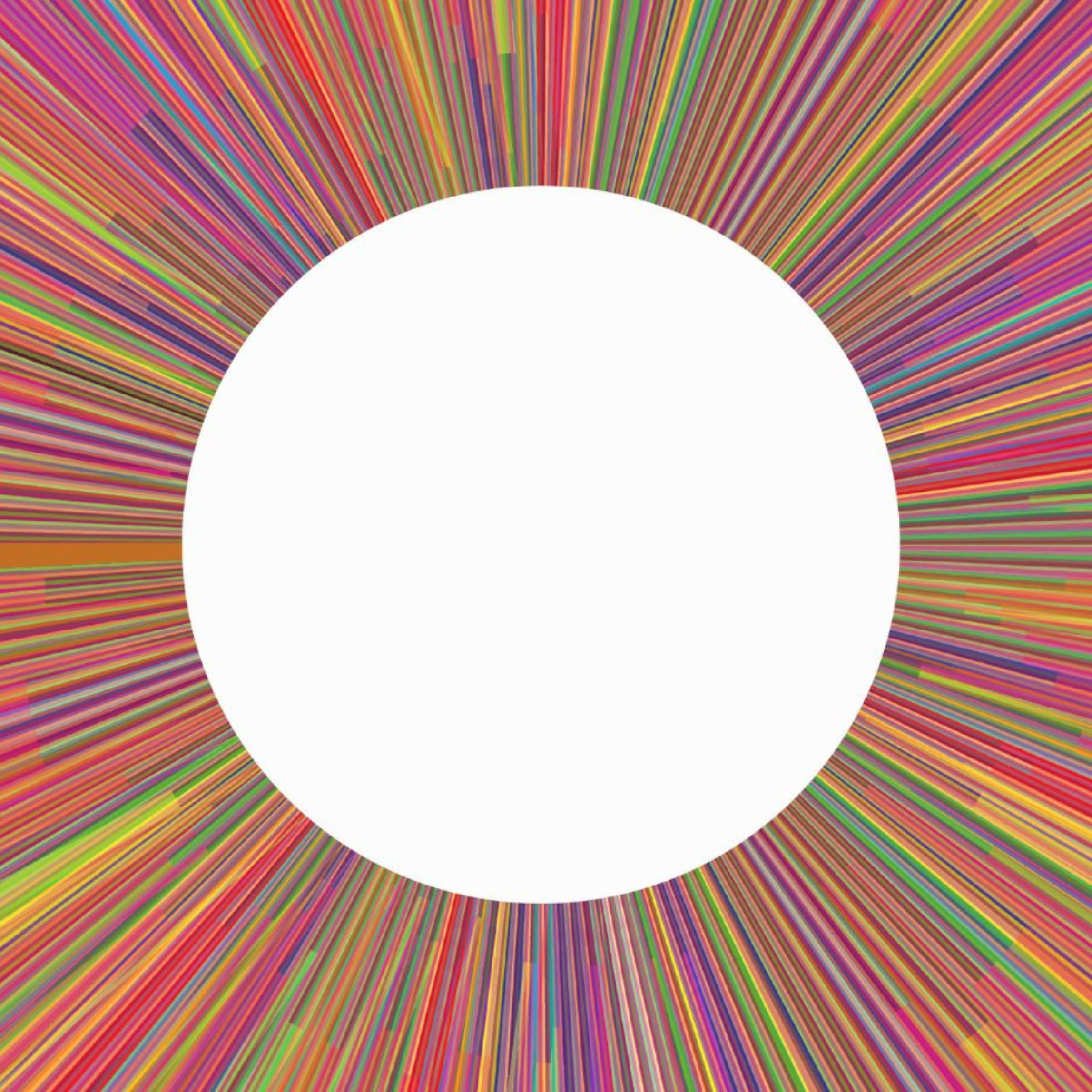
In the practice I call Drawing Music, I explore whether these musical structures can be translated into visual form - transforming composition into spatial colour systems.
Rather than beginning with a palette, each work begins with the structure of a score. Musical intervals, rhythm and tonal relationships generate visual proportion, colour and geometry.
The work Ave Maria explores these ideas through a radiant circular composition inspired by Franz Schubert’s setting of the famous prayer. The piece draws not only from the structure of the music itself, but also from the story that surrounds it — a moment of quiet refuge within Walter Scott’s narrative poem The Lady of the Lake.
Radiance and the Empty Centre
The circular structure of the work recalls the radiant halos found in Renaissance painting, where rays of light extend outward from a sacred presence. These sunburst halos were visual systems used to represent something intangible — divine light made visible through geometry.
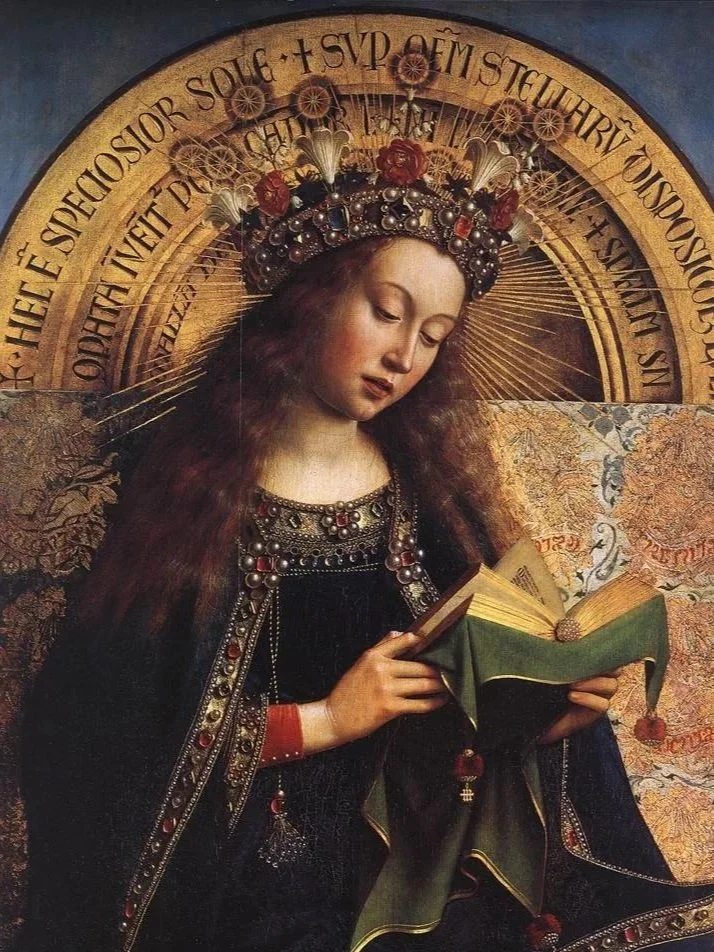
The Virgin Mary, Ghent Altarpiece of 1432 by Jan van Eyck
In Ave Maria, the centre of the composition is intentionally left empty. In traditional religious imagery this is where the subject would appear: the head encircled by light. Here the absence invites contemplation. The empty centre becomes a place of potential presence — a symbolic space of origin.
Musically, this centre can be understood as the tonic: the tonal home from which a composition begins.
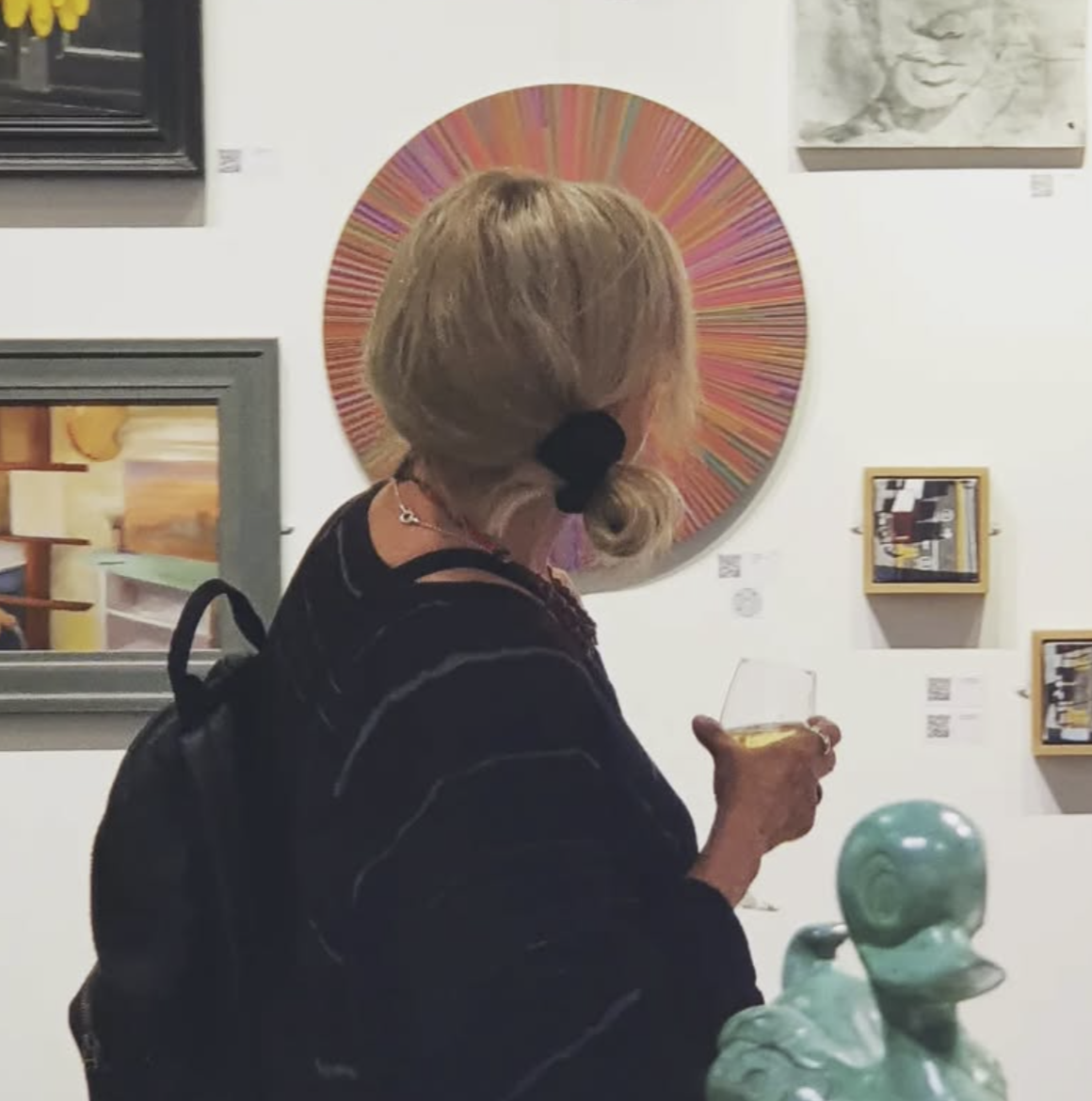
Ave Maria, ING Discerning Eye 2022
Departure and Return
From this central origin the rays extend outward, radiating through the composition.
In tonal music, a piece often begins at the tonic before exploring other harmonic territories through Modulation — the movement into different keys that creates tension, development and narrative within the music.
The outward movement of the rays reflects this same principle: a journey away from the centre in search of resonance before the possibility of return.
Structure Before Colour
The work approaches colour structurally rather than decoratively, drawing on traditions that connect musical harmony and visual form. Bauhaus colour theorists such as Johannes Itten explored systematic relationships between colours that parallel harmonic relationships in music.
In this sense the composition functions like a visual score: a spatial arrangement generated from musical relationships rather than aesthetic preference.
Colour follows composition.
Sanctuary
Across centuries the idea of sanctuary has remained deeply human. Whether spiritual, emotional or geographical, the search for refuge continues to shape human experience.
In Ave Maria, the radiating structure becomes both musical and symbolic — a visual meditation on departure, refuge and the quiet hope of return.
View the work
You can explore Ave Maria in more detail, including additional images and purchasing information here
Drawing Music
Music translated into spatial tone.
What is your place of sanctuary?
Is there a piece of music you find yourself returning to — again and again — as a place of quiet refuge?
How I Turn Music into Colour
Harmony, Structure, and the Logic Behind Drawing Music
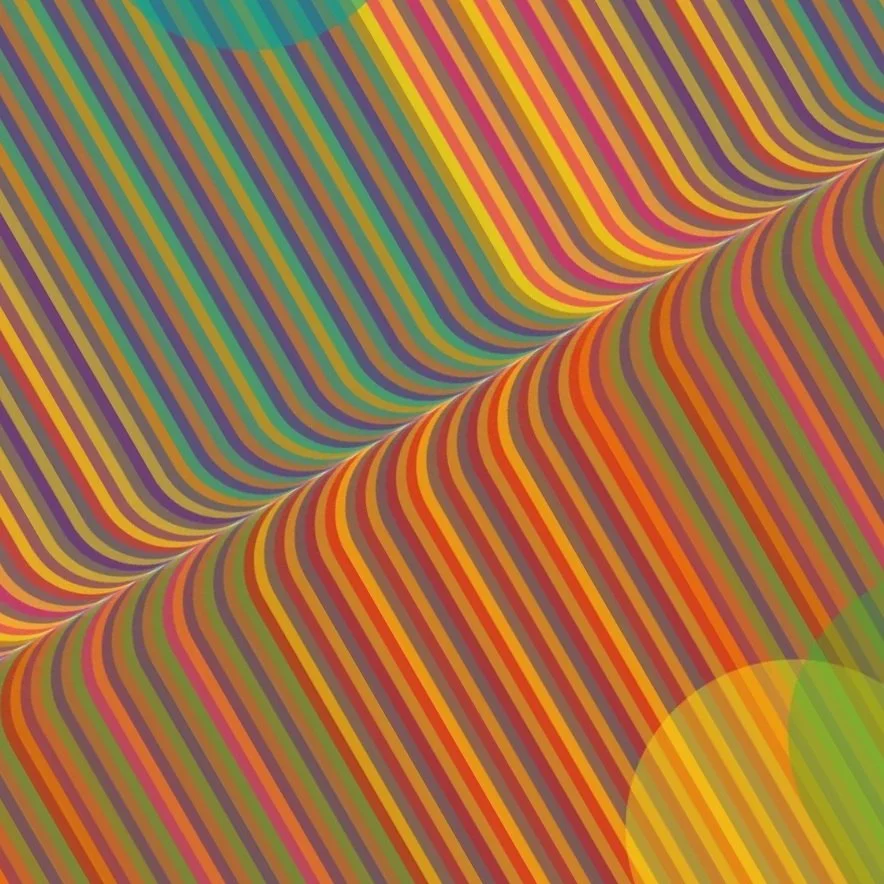
I turn music into colour by translating a score note by note. Each note carries its own fixed colour, and the relationships between the notes become relationships between colours. So a piece you'd normally hear becomes something you can see at the same time. Here's the thinking behind it.
At the heart of my practice, Drawing Music, is a simple but enduring question:
What happens when music is allowed to exist in space rather than time?
Music unfolds moment by moment, while drawing exists all at once. My work explores the meeting point between these two languages by translating musical scores directly into colour — not as illustration, but as a parallel system shaped by structure, relationship, and progression.
The idea that sound and colour might share underlying principles has long fascinated artists and thinkers.Isaac Newtonexplored parallels between the musical scale and the colour spectrum, while composers such as Alexander Scriabin associated musical keys with colour and imagined performances combining sound and light. My own work does not seek to replicate these systems, but it sits in conversation with them - rooted in the same curiosity about harmony across sensory languages.
How I Choose My Colours
When people ask how I choose the colours in my work, I often begin by saying that I work with the colours of the rainbow. It’s a simple phrase, but a deliberate one. It immediately evokes an ordered sequence - a spectrum in which colours exist in relationship to one another rather than as isolated events.
From the very beginning, what mattered most to me was how colours lead into one another. Red moves naturally into orange; orange into yellow; yellow into green. These transitions feel harmonious because they evolve gradually. A jump from red directly to green introduces a much sharper visual tension - a different kind of relationship altogether.
This sense of continuity became fundamental to my colour system. I wanted colour to behave as notes do within music: understood through proximity, progression, and flow. Harmony, in this sense, is not imposed, but allowed to emerge.
Numbers, Patterns, and Early Conditioning
Looking back, I can see that my attraction to systems, sequences, and coded structures began much earlier than my formal training in either art or music.
As a child, I loved activity books that resembled word searches - except the “words” were not words at all, but numbers. Simple groupings at first, combinations of two or three, gradually increasing in complexity to strings of seven, eight, or nine. I was fascinated by scanning the page, recognising patterns, and finding order within what initially appeared abstract.
In many ways, selecting colour today through strings of numbers and letters feels like a continuation of that early fascination. Referencing a precise colour code, for example e30613, is not a clinical or detached act for me, but a familiar and reassuring one. It allows colour to be understood relationally rather than symbolically, situated within a system rather than assigned a meaning.
I often think of this as a form of environmental conditioning: an early comfort with coded information, progression, and pattern recognition that now finds expression in my artistic process. Just as those childhood number searches rewarded patience and attentiveness, my work today relies on careful observation, and on how one element leads into the next, and how structure can quietly give rise to harmony.
It feels fitting that Drawing Music sits between music and colour - both languages shaped by sequence, relationship, and the unfolding of patterns over time.
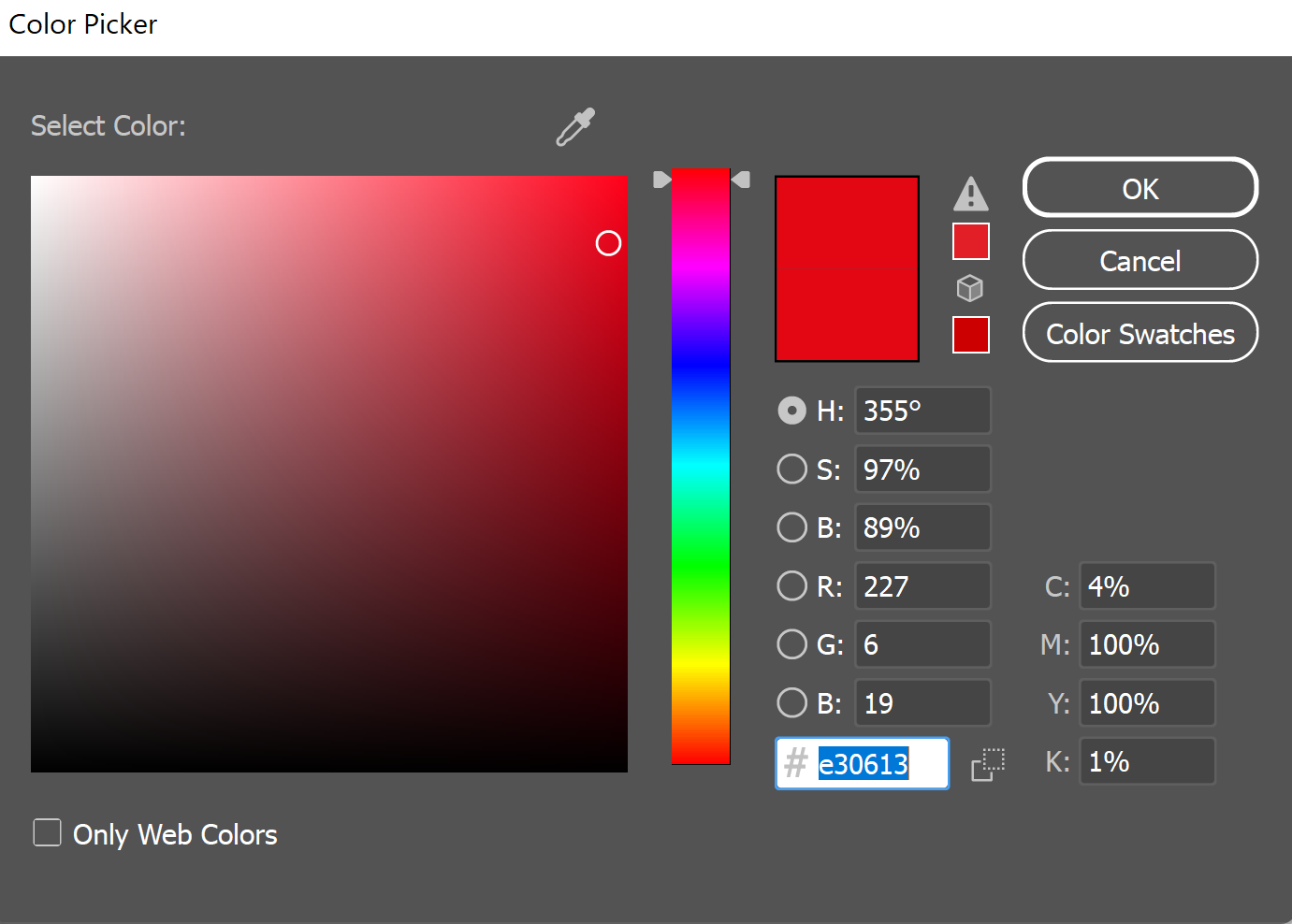
The digital palette I work with
Working within a continuous colour spectrum allows for gradual, harmonious transitions. Individual colours are selected precisely using digital colour codes.
Tonal and Atonal: Seen as Well as Heard
These ideas become particularly visible when comparing tonal and atonal interpretations of the same piece of music.
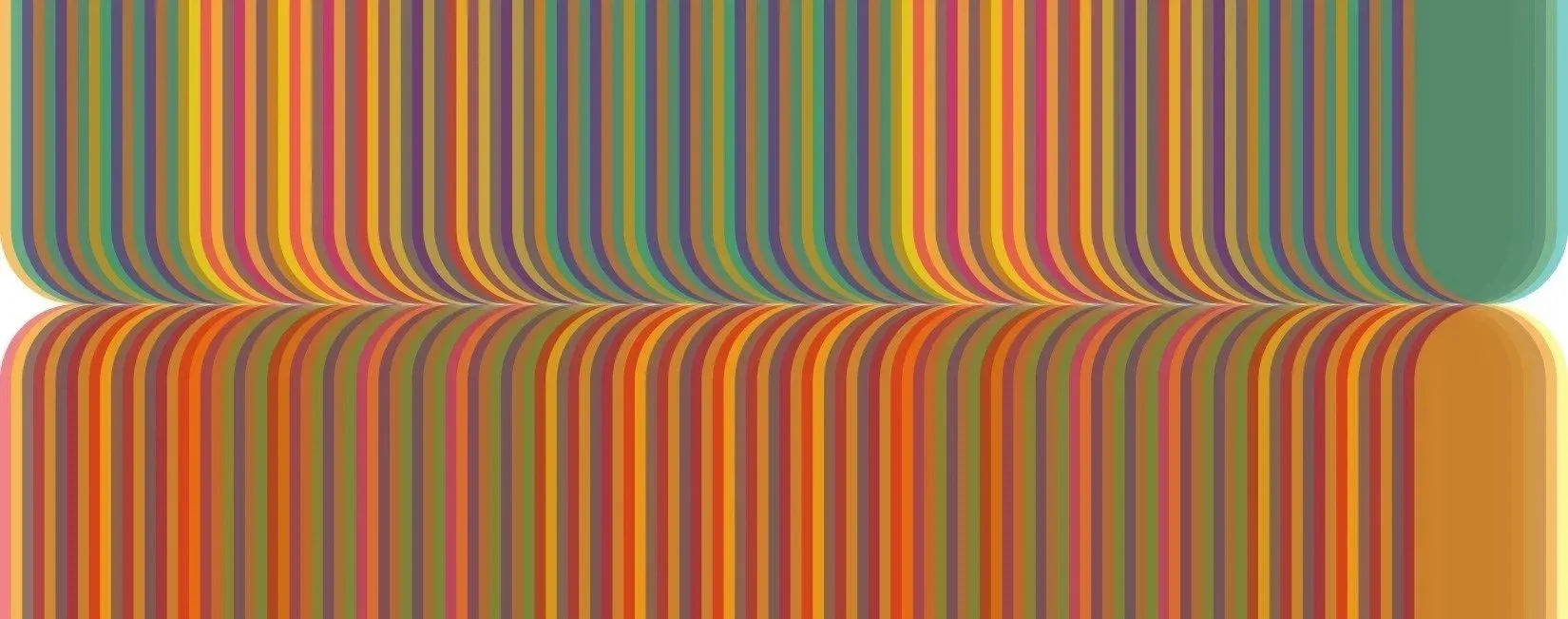
Top image: Tonal version of Ave Maria, Bottom image: Atonal version of Ave Maria
In tonal translations, colour often reveals a clearer sense of tension and release. There is a visible rise and fall as colours shift and resolve, echoing the directional pull of tonal harmony.
In atonal interpretations, colour behaves differently. Progressions may feel more continuous and evenly distributed, with less emphasis on contrast or resolution. Rather than moving towards a centre, colours coexist within a more generalised field.
Although atonal music can sometimes sound unfamiliar, its visual translation is not discordant. It simply carries a different flavour - cohesive, rich, and quietly harmonious in its own way.
Because my work translates note relationships directly into colour relationships, emotional qualities emerge through structure rather than being imposed. Just as music can be harmonious in more than one way, colour, too, can hold balance and beauty across different systems.
Go further
The digital edition of my Prelude in C comes with my visual listening guide - the full system, and how to read a finished piece. Because layered notes merge into new colours, just as notes merge into a chord, it isn't about tracing a melody but about seeing the music's architecture: the blends and progressions as the harmony they are. Take a look here
To find your own place within the system, take the free colour archetype quiz — your result will be shared with you afterwards.
Why I Draw Music
On translation, colour, and letting music speak visually
For a long time, I’ve felt the need to explain what I do — not defensively, but honestly. To put language around a practice that lives between sound and colour, between listening and looking. This feels like the right place to begin.
Recently, I was listening to a podcast by Michelle Lynne, where she was speaking with guest, Dustin Boyer, about branding in the Classical music world. One point in particular stayed with me: within the classical repertoire, so many musicians are working with the same scores, again and again. What we hear is often less about asserting individuality for its own sake, and more about serving the composer — about conveying what the music itself is asking to express.
That idea resonated deeply with my own practice.
From performance to study
Music has been part of my life from a young age, and the piano was my first serious creative language. I completed all my piano grades and a Trinity Performance Certificate, and for a long time I imagined music might become my primary path. While I don’t claim the life or discipline of a professional concert pianist (and I still feel a genuine humility in the presence of those who have pursued music at that level) the way I listen has been shaped by years of study, practice, and attention.
There is also something more personal at play. When I was learning the piano, I was always aware that I didn’t spend enough time away from the instrument, studying the score quietly — sitting with the music, understanding its structure and inner logic beyond the demands of performance. Drawing Music has become a way of returning to the score away from the piano, engaging with the music as a visual artist….studying its structure, relationships, and logic through colour rather than through performance.
Translation, not performance
In Classical music, the performer is alive, present, and bringing something of themselves in that moment. Some composers, like Glenn Gould for example, have placed particular emphasis on the individuality of the performer and the act of interpretation itself.
My role, however, is different.
I am not performing the music. I am translating it.
Working directly from the score, I translate musical notes into colour through a pre-determined system. Because of this, I am not expressing emotion through gesture or physical interpretation. Instead, I allow the music’s own truth and beauty to emerge visually, through the relationships between colours.
The emotional content doesn’t disappear — it simply shifts location.
Where the dynamics live
In my work, dynamics arise through colour itself.
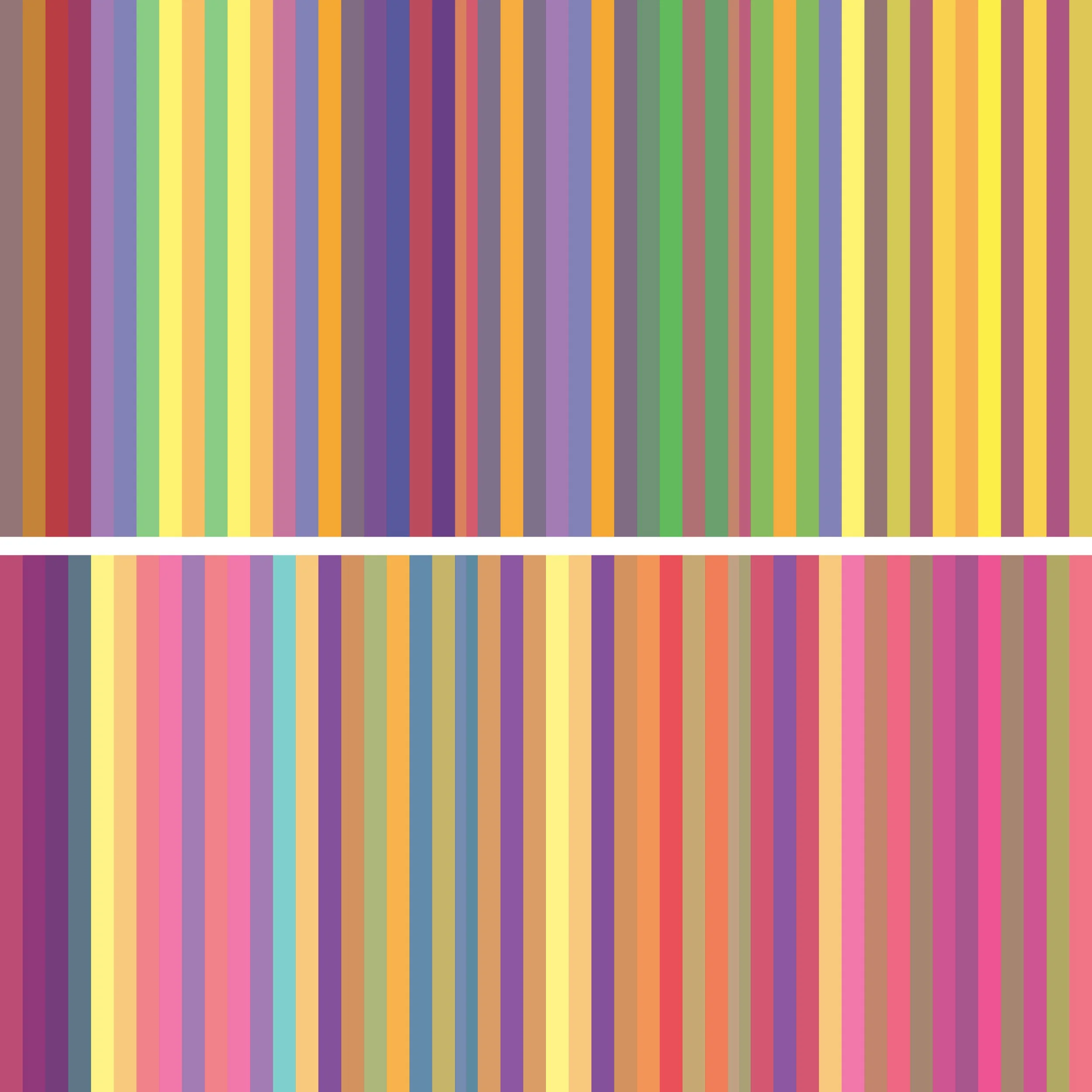
Just as dynamics in music are created through contrast, tension, and resolution, the same happens visually. A red next to a blue creates one kind of tension. Red layered over green and pink produces another. How colours sit beside one another, how they merge, clash, or soften — that is where movement lives in my work.
This is why my process can appear methodical, repetitive, even dogged at times. I return to the same system again and again, much like the Classical repertoire returns to the same scores. But within that repetition, subtle differences matter enormously.
I am operating entirely within the visual field, yet the logic remains musical.
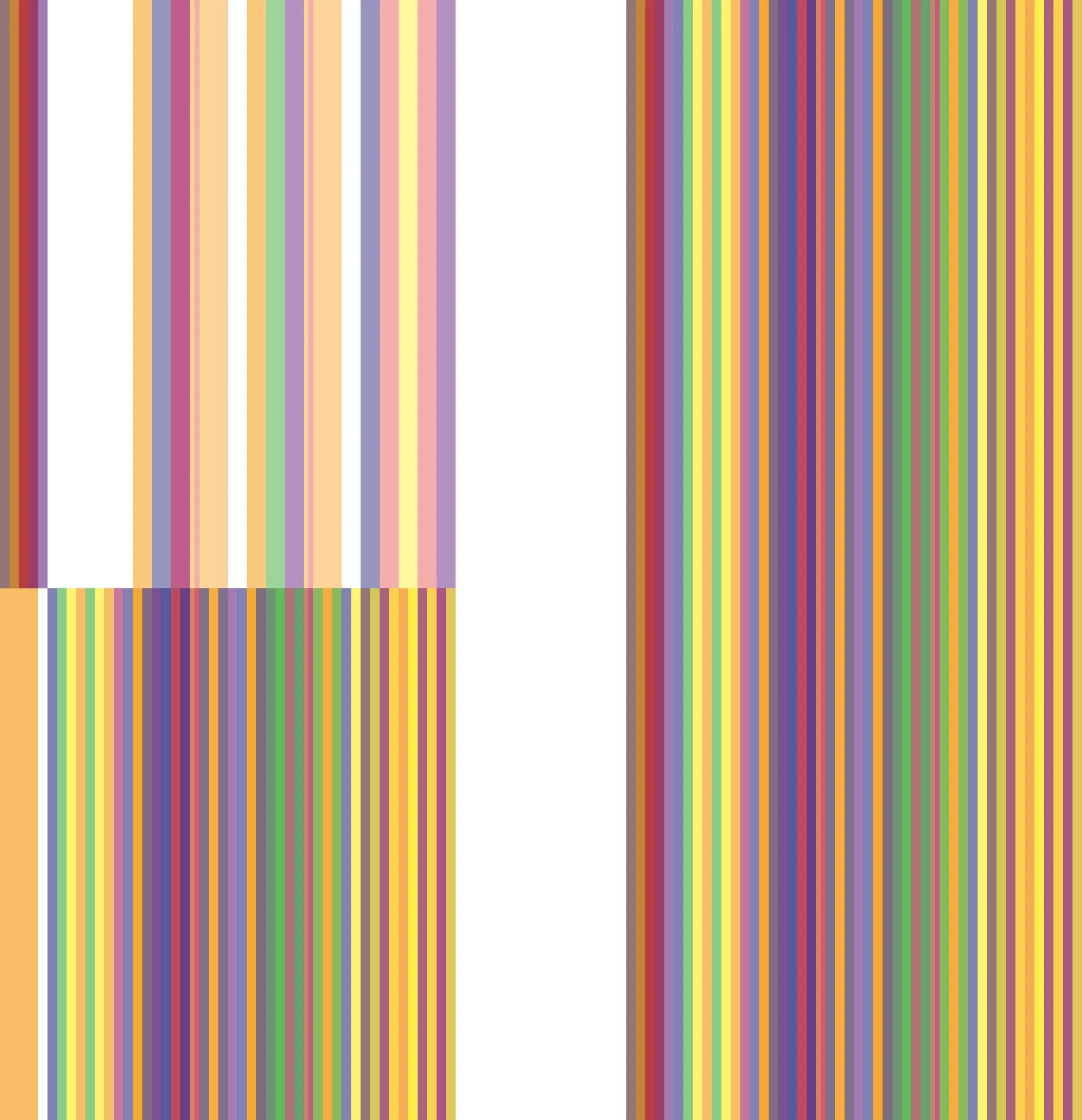
From Prelude in D Minor, Bach. Left: bars 5-8 separating right and left hand. Right: Bars 5-8 blending left and right hand
Digital drawing, light, and material
There is often an assumption that digital work is easier, quicker, or emotionally thinner than traditional drawing. I’ve wrestled with that idea myself. But for me, working digitally allows me to mix colour through light rather than pigment — and colour, quite literally, is light.
Digital colour is governed by coded systems, numbers, and relationships (not unlike music notation itself). Every decision is intentional. Every mark is chosen.
My top-of-the-range works are printed on ChromaLuxe aluminium panels using a sublimation process that permanently fuses colour into metal, creating exceptional depth and luminosity. Alongside these, I also produce limited edition prints on fine art paper. These are equally carefully considered, signed, and editioned works that offer a different, more intimate way of living with the work. Metal amplifies light and saturation, while paper offers softness and quiet presence. Both are integral to my practice.
Why I’m sharing this
I’m writing this because connection matters.
Drawing Music is not about decoration. It is about attention. About listening carefully, translating faithfully, and trusting colour to carry what sound has already communicated.
This year, I’ve committed to writing one blog post each month. This will be a space to share not just finished work, but the thinking, listening, and quiet processes behind it.
If my work resonates with you, it’s likely because you recognise that space too — where meaning builds slowly, and repetition becomes devotion.
That is where my work lives.

A Joy That Lasts: From Bach to Colour
Prelude in C – A Visual Meditation on Serotonin
There’s a kind of joy that doesn’t rush in, sparkle, and disappear. It builds slowly. Lingers. Deepens over time. This is serotonin joy - and it’s something I return to again and again in both music and art.
One of the first pieces that brought this feeling to life for me (visually) was Prelude in C, the very first in my signature Stripes series, created in 2020.

The Music Behind the Work:
Bach’s Prelude in C Major is a favorite among pianists, not because it’s flashy, but because of how it feels, both to play and to hear. Its steady rhythm (a stream of arpeggios) mimics breath. There’s no rushing, no climax - just movement through time, harmony, and emotion.
It’s calming. Reassuring. Spacious.

Extract (bars 24-27) from Prelude in C by Johanne Sebastian Bach
Translating Sound to Colour:
When I created Prelude in C, my belief (and hope) was that the colours would follow that same emotional architecture. Nothing sudden or loud. A rhythm of stripes that gently invites you in. A visual meditation.
The result was just this!
In the World:
Since then, this piece has found its way into many spaces - art fairs, London’s The Shard, in the chic cocktail bar of London’s Town Hall Hotel, until finally settling into the private collection of a buyer who told me it brings them quiet joy each day!
For me, that’s the power of serotonin-inspired art.
It stays with you.
It shifts the room.
What artwork (or piece of music) has stayed with you over the years? I'd love to know.
You can get in touch with me here
🎧Listen to my performance of Prelude in C here

An Art Exhibition Called ‘Farnham Legends’
After six months in the making, it was finally time to showcase all our hard work.
We had a fantastic Private View at The New Ashgate Gallery on Friday 12th January!
Fiona, Chloe and I, each gave a short speech about our work, as well as welcoming The Heroes to perform a selection of songs. Stephen Noyce led the band from Post19 brilliantly, with whom I had collaborated by interpreting a couple of their songs into vibrant and unique, digital fine art.
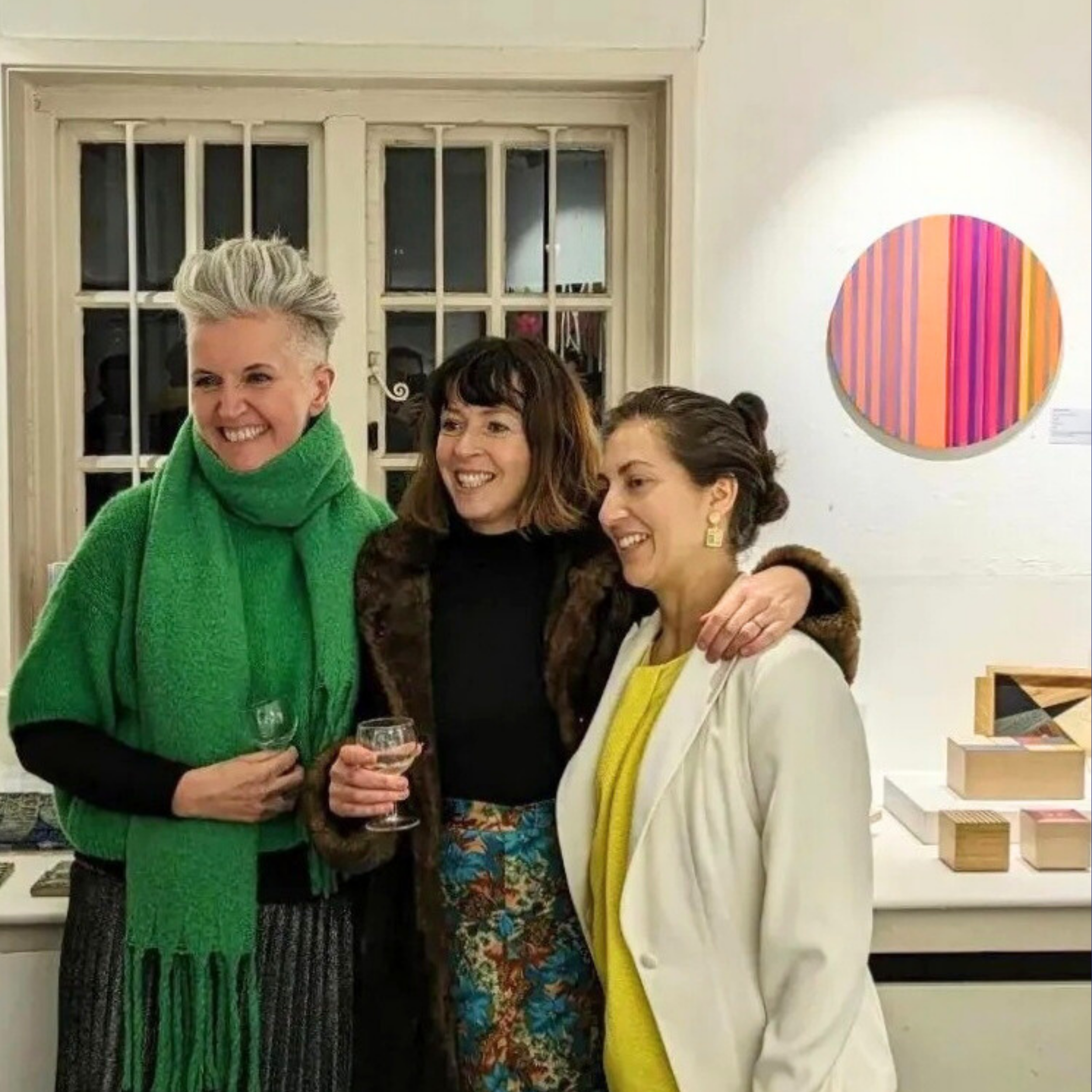
From left to right: Fiona Pearce, Chloe S Moncrieff, Elizabeth Mikellides
If you would like to listen to what I had to say on the night, click on the video above!
You can listen to The Heroes in action on the night by clicking above!
If you would like to visit, 'Farnham Legends,' the show will be on display until March 9th at:
The New Ashgate
GalleryWaggon Yard
Farnham GU9 7PS
✨View more artwork from the artists I exhibited with here: Fiona Pearce and Chloe S. Moncrieff

The Creative Act of Drawing
Drawing is something we are all capable of doing
2nd October, 2023
This is my first blog post and I would like to begin by introducing what Drawing means to me and how I believe this is at the core of all creativity. In writing briefly about Drawing, I also hope to encourage you, the reader, to draw also.
Drawing is something we are all capable of doing and I would go one step further in saying we ought to do. Whether you keep a sketchbook as a personal diary or whether you choose to share your work with others, Drawing is invaluable to our emotional wellbeing. We solve, resolve, aspire and dream through drawing and this is why it is imperative to us as people and creators of our world now and future.
I always enjoyed drawing from a young age myself and went on to study art at university. The BA Hons I took was actually a Drawing degree. Drawing is not just the preliminary step we undertake before painting. It is much, much more! Here are a few characteristics / descriptions of Drawing:
Records information
Explores ideas through sketching
Encourages curiosity
Teaches us to see
Fosters imagination
Helps the flow of ideas
There are specific principles to Drawing of course for when we look at perspective and technical drawing in general but there is also an intuitive and playful side to it, which is what Picasso worked so hard to capture. Drawing can therefore be confining and liberating. It all depends on what you want to communicate and how. Music has also always been important to me, and I choose to describe it through drawing. These first explorations began on my Drawing BA back in 2000.
Describing, delineating, drawing parallels and discovering patterns in music scores is what I love to do. I choose to do it digitally and use Illustrator for this via the mouse pad. Drawing digitally suits my current process because I’m looking for accuracy and specificity of colour tones - something mixing paint on canvas won’t give me.
My working method is logical and calculative at its core but can be intuitive as well. Similarly, a piece of music is written with certain musical theories and concepts (logical bit) and the performance of that piece, is an interpretation of the score, using dynamics and period styling (intuitive bit).

Piano Piece I: Bars 14-15, music by Jens Morsing
Drawing allows me to make sense of the world around me – of music. It is my escape, my sanctuary. Through drawing, I can reconnect with music and share its inner beauty with others by giving it visual form. It’s a kind of music appreciation through visual art.
Drawing could be something you also turn to, to reflect on moments or elements in your life, to make sense of them or to take a break from them. Through this introductory post, I encourage you to draw yourself. Go buy a little sketchbook or a big one! Enjoy experimenting and taking some time out.
I have work in two shows this month, which you can learn more about on my website’s homepage. One is called Rhythm in Art at Liberation Gallery in Brighton and the other is The SOTA Accessible Art Fair in London.