
Ave Maria: Radiance, Sanctuary and the Structure of Music
Music unfolds through time.
It moves, develops, departs and returns.
In the practice I call Drawing Music, I explore whether these musical structures can be translated into visual form - transforming composition into spatial colour systems.
Rather than beginning with a palette, each work begins with the structure of a score. Musical intervals, rhythm and tonal relationships generate visual proportion, colour and geometry.
The work Ave Maria explores these ideas through a radiant circular composition inspired by Franz Schubert’s setting of the famous prayer. The piece draws not only from the structure of the music itself, but also from the story that surrounds it — a moment of quiet refuge within Walter Scott’s narrative poem The Lady of the Lake.
Radiance and the Empty Centre
The circular structure of the work recalls the radiant halos found in Renaissance painting, where rays of light extend outward from a sacred presence. These sunburst halos were visual systems used to represent something intangible — divine light made visible through geometry.
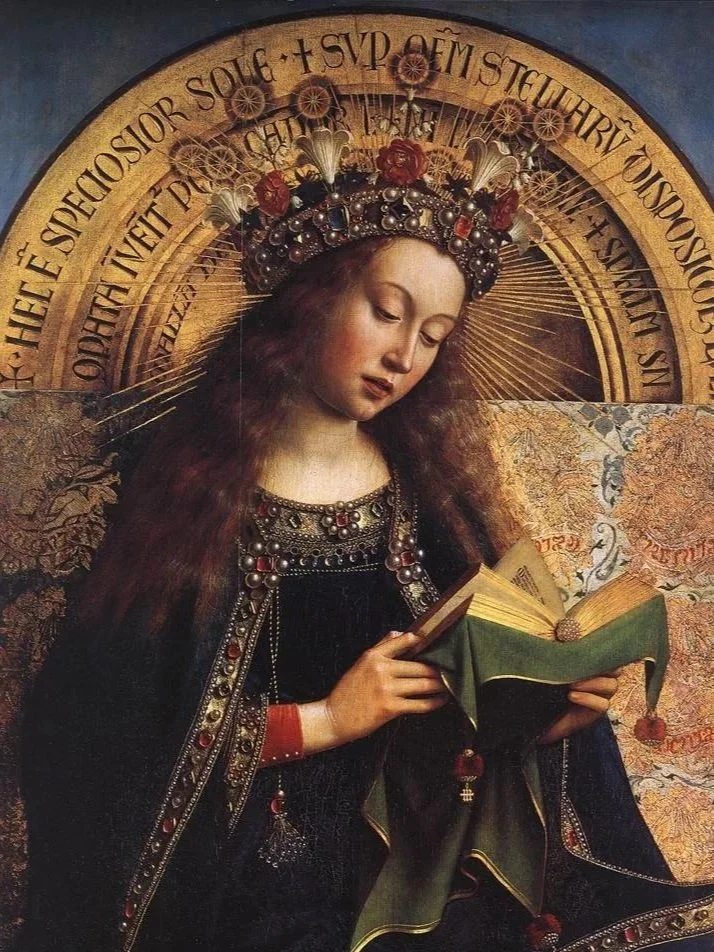
The Virgin Mary, Ghent Altarpiece of 1432 by Jan van Eyck
In Ave Maria, the centre of the composition is intentionally left empty. In traditional religious imagery this is where the subject would appear: the head encircled by light. Here the absence invites contemplation. The empty centre becomes a place of potential presence — a symbolic space of origin.
Musically, this centre can be understood as the tonic: the tonal home from which a composition begins.
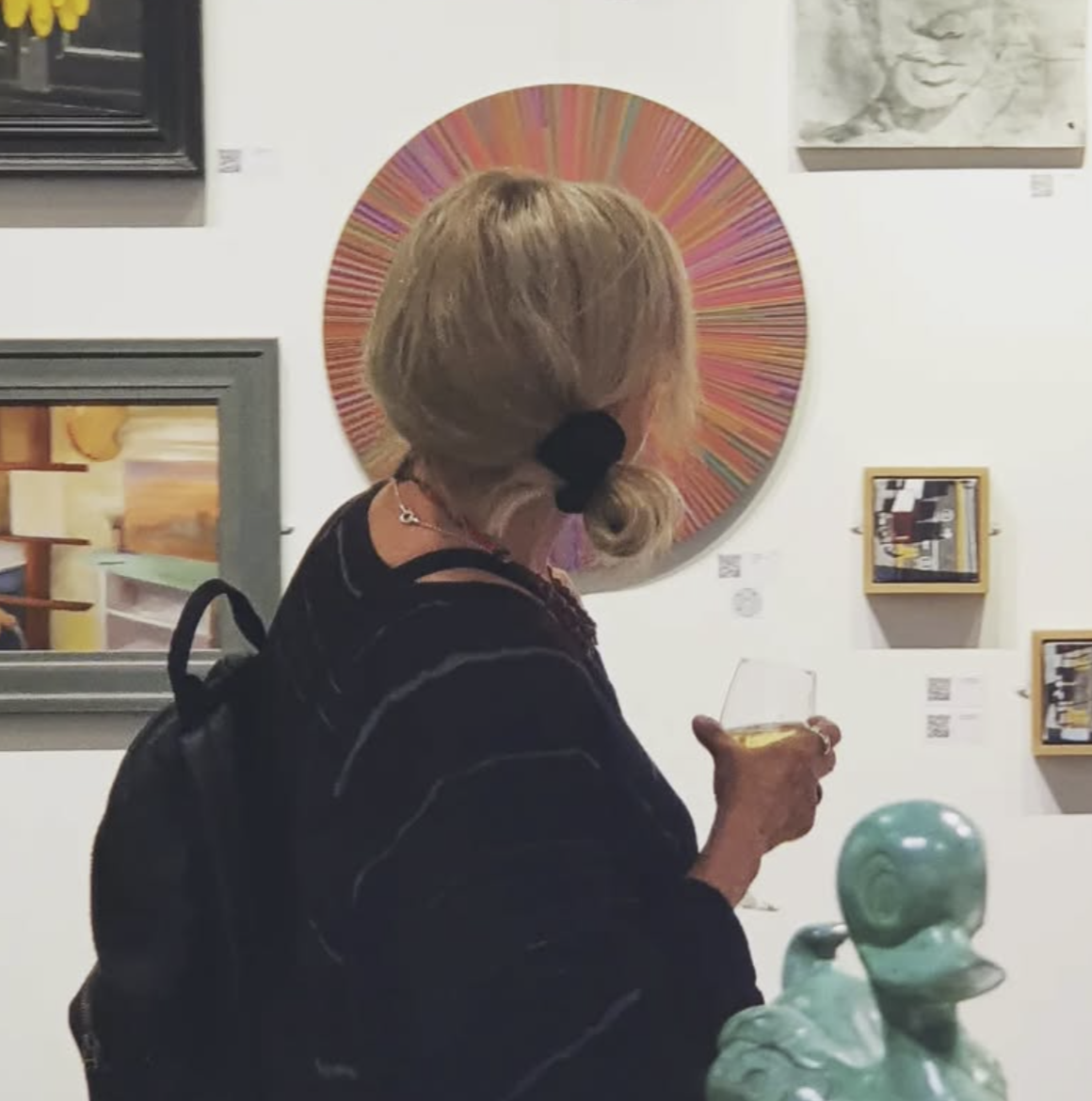
Ave Maria, ING Discerning Eye 2022
Departure and Return
From this central origin the rays extend outward, radiating through the composition.
In tonal music, a piece often begins at the tonic before exploring other harmonic territories through Modulation — the movement into different keys that creates tension, development and narrative within the music.
The outward movement of the rays reflects this same principle: a journey away from the centre in search of resonance before the possibility of return.
Structure Before Colour
The work approaches colour structurally rather than decoratively, drawing on traditions that connect musical harmony and visual form. Bauhaus colour theorists such as Johannes Itten explored systematic relationships between colours that parallel harmonic relationships in music.
In this sense the composition functions like a visual score: a spatial arrangement generated from musical relationships rather than aesthetic preference.
Colour follows composition.
Sanctuary
Across centuries the idea of sanctuary has remained deeply human. Whether spiritual, emotional or geographical, the search for refuge continues to shape human experience.
In Ave Maria, the radiating structure becomes both musical and symbolic — a visual meditation on departure, refuge and the quiet hope of return.
View the work
You can explore Ave Maria in more detail, including additional images and purchasing information here
Drawing Music
Music translated into spatial tone.
What is your place of sanctuary?
Is there a piece of music you find yourself returning to — again and again — as a place of quiet refuge?